


Company Profiles
Laird Norton Wetherby Continues Leaning Into ESG

This publication recently interviewed the multi-family office about its views on ESG/sustainability investing, the M&A trend in the sector, and more.
When asset management titan BlackRock closed some ESG-branded funds in the autumn of 2023, it signified a “vibe shift” in how using market muscle to drive environmental, social and governance change clashed with financial reality. At $13.5 trillion in AuM, they don't come bigger than BlackRock.
Whatever the change in the mood, however, there are those in the wealth sector who think long-term investing and ESG considerations – sometimes also referred to as “sustainability” – are complementary, not in conflict and have plenty of appeal for HNW investors. In certain cases, ESG - or whatever term is used - equates to solid due diligence taken to another level.
In fact, with some large firms perhaps making less noise about ESG/sustainability than before energy markets were roiled by the Russia/Ukraine conflict, Covid and politics, those who continue to walk the path will stand out.
Kristen Bauer (pictured below), CEO of the $16 billion multi-family office Laird Norton Wetherby, recently talked to Family Wealth Report about the ESG issue and how the 58-year-old organization and its clients view the topic. She also reflected on continued M&A activity in the MFO/wealth management sector. LNW has itself been though transactions in the past few years.
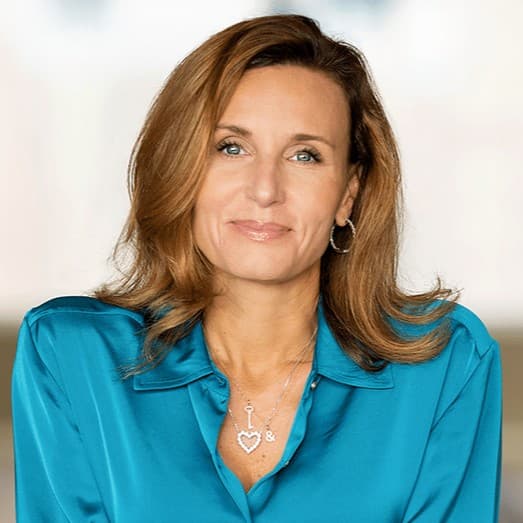
Kristen Bauer
“Families are shying away from it [ESG]…however, we are leaning into it. This has become important for our clients,” Bauer said. “About 30 per cent of our clients have at least one impact investment.”
“We also think that it [sustainability] is the right thing to do….and it also makes good business,” Bauer continued.
Part of the issue in recent years is concerns that investment firms were spinning their offerings as greener than they really were – “greenwashing” – tainted the idea. “There was a lot of greenwashing out there because it [ESG] was the cool thing to do.”
Demise of ESG is greatly exaggerated
However, while some of the nomenclature around ESG may have
shifted, the desire of HNW and UHNW individuals to drive positive
change has not, even if approaches vary. A 2025 report by
Morgan
Stanley, based on 1,765 investors in North America, Asia and
Europe, said that 88 per cent of investors globally were
interested in sustainable investing, with more than half saying
they were “very interested.” Interest was highest among Gen Z (99
per cent) and Millennials (97 per cent) – chiming with a general
impression that younger adults tend to be keener than older
people. The main motivations for investor interest vary
– around 45 per cent of North American and APAC investors
seek real-world outcomes, while in Europe over 40 per cent of
investors believed sustainable investments could offer stronger
financial returns than traditional investment.
Another finding was that more than half of investors planned to expand sustainable investment allocations in the next year, while only 3 per cent globally planned to decrease them.
“Clients come to us with a broad level of impact investing goals and objectives and come to us for guidance to invest their catalytic capital,” Bauer said.
There’s little doubt that the rise of ESG has been bumpy, but it is not going away.
Research published in October 2024 from Ocorian, the global provider of services to HNW individuals, family offices, financial institutions, and others, said family offices are increasingly focused on the returns from ESG investing. Those working in FOs, including multi-family offices, almost all (99 per cent) said ESG principles were a key consideration for family office investment priorities and 80 per cent agreed it is part of their fiduciary duty.
The growth and size of LNW contributes to its ability to deliver services clients want and provide an attractive career for its employees, Bauer said.
In late 2020, Laird Norton Wealth Management merged with another Seattle-based firm, Filament. (In the same year, Bauer was made CEO of Laird Norton Wealth Management.) About a year later, the group hooked up with San Francisco-based Wetherby Asset Management and rebranded in 2024.
As regularly reported by this news service, M&A in wealth management has been busy. One reason is achieving scale so that firms can efficiently deploy new technologies, recruit and keep high-achieving staff, and keep clients happy. The trick is to balance all that with maintaining organizations that look and feel close to clients.
“This has been the most active year in M&A for the wealth management industry,” Bauer said.
“With growth come opportunities for our people. We want to be a home for them to have a career,” Bauer said, who agreed that there is a battle for talent going on.
Bauer's own career has been varied. Prior to LNW, she was a senior leader at Tiedemann Advisors (the firm that is now part of the expanded AITi Tiedemann Global group) serving as managing director for the Pacific Northwest and leading Tiedemann’s national family office practice. Previously, she served in leadershp roles at Threshold Group, which began as the family office for a prominent Northwest family and was acquired by Tiedemann in 2017. At the start of her career, Bauer was director of finance at Medalia Healthcare and manager-assurance at Arthur Andersen LLP.
She was asked about the involvement of private equity firms in some of the M&A arena. Bauer replied that people needed to understand that private equity buyers typically have a set timeframe over which they wish to realize a profit. “Investors will want to get their money back at some point,” she said.
LNW is open to the outsourcing of certain functions.
“I am not against a partner which is an external organization if
that can deliver a standard, we would expect for ourselves,”
Bauer said.
LNW is privately held by employees and the Laird Norton Company,
which represents the Laird and Norton family. This private
combined ownership represents an ownership by families, all on
behalf of its client families. The firm, which is
headquartered in Seattle, has offices in San Francisco, LA,
New York City and Philadelphia. It operates a trust company in
South Dakota and Washington. LNW also has a growing group of
employees in other cities such as Portland and San Diego.